
↓
 

St. Louis Land Surveying

Local Land Surveyors in St. Louis, MO

St. Louis Land Surveying
  • Home
  • ALTA Survey
  • Boundary Surveying
  • Construction Survey
  • Drone LiDAR Mapping
  • Elevation Certificate
  • Land Surveying
  • Topographic Survey
  • Blog
  • Contact Us
Home - Page 2 << 1 2 3 4 … 7 8 >>

Post navigation

← Older posts
Newer posts →

How Do Construction Surveys Keep Large Projects Moving in the Same Direction

St. Louis Land Surveying Posted on June 24, 2026 by St. LouisSurveyorJune 25, 2026
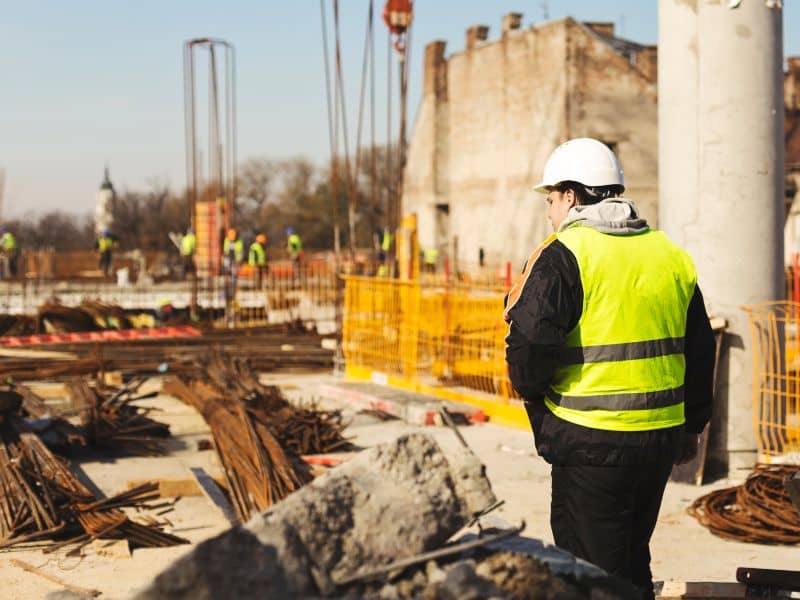
Construction survey supporting coordination across multiple crews on a large commercial construction project

A big construction site can feel like organized chaos. Trucks come and go. Crews shift from one task to the next. Materials pile up in one spot, then disappear the following week. With so much movement, how does a project actually stay on track? The answer usually comes down to construction surveys, which give every part of the job a shared set of numbers to build from.

Without that shared reference, even a well planned project can drift off course. Walls might not line up. Pipes might miss their mark. Small errors stack up fast on a large site. Construction surveys are what keep all of that from happening, and they do it in ways that are not always obvious from the outside.

A Project’s Original Vision Does Not Always Stay the Same

Plans change. That is just how large developments work. A design gets revised halfway through construction. A client asks for a different layout. A budget shift forces a new approach to one part of the site. None of this is unusual, and none of it has to throw a project into chaos.

Construction surveys help absorb these changes without losing the bigger picture. Surveyors update their control points and measurements as the design shifts, so every team working on site still has accurate numbers to follow. This keeps the project moving forward instead of stalling out every time something changes on paper.

Without this kind of tracking, revisions can create real confusion. One crew might keep building off old plans while another already switched to the new ones. That mismatch causes rework, wasted material, and frustrated teams. Surveys close that gap and keep everyone working from the same version of the project.

Different Teams Arrive With Different Responsibilities

A large site brings in all kinds of specialists. Excavation crews dig the foundation. Utility contractors run pipes and wires underground. Concrete teams pour the slabs. Structural crews put up the frame. Paving contractors handle roads and parking lots. Each group focuses on a narrow piece of the larger puzzle.

These teams rarely overlap in skill set, but they all need to build off the exact same reference points. Construction surveys give them that shared foundation. A utility crew laying pipe needs to know it will line up with the foundation work that comes after it. A paving crew needs their grades to match what the drainage system was designed around. Survey data makes all of that possible.

This matters even more because these crews often are not on site at the same time. One team finishes and leaves before the next one even shows up. Without solid, documented reference points, there would be no reliable way to confirm that each phase actually connects the way it should.

Temporary Features Come and Go, but Reference Points Remain

Construction sites change appearance constantly. A staging area sits in one spot for a few weeks, then gets cleared out. Stockpiles of dirt or gravel pile up, get used, and disappear. Access roads shift depending on which part of the site needs equipment that week. None of this is permanent, and none of it is meant to be.

What does stay constant is the survey control set up at the start of the project. These control points are placed in locations meant to last through the entire build, often away from areas that will see heavy equipment traffic or repeated digging. Crews can return to these points at any stage and trust that the numbers still hold true.

This stability matters more than it might seem. If reference points moved every time the site layout changed, nothing built on site would ever be reliable. Permanent control gives every phase of construction something solid to measure against, no matter how much the temporary parts of the site shift around it.

Schedule Adjustments Can Affect More Than Just Deadlines

Delays happen on almost every large project. Bad weather pushes back a pour. A material shipment arrives late. A permit takes longer to approve than expected. Sequencing gets rearranged because one trade finishes early and another runs behind. These interruptions are frustrating, but they rarely stop a project completely.

What they can do is create gaps between phases of work. A crew might leave a site for weeks and come back to find conditions slightly different. Construction surveys make that return much easier. Surveyors can confirm that existing work still matches the original control points, so a new crew can pick up exactly where the last one left off without redoing measurements from scratch.

This continuity protects more than the schedule. It protects the accuracy of the whole project. A team coming back after a long delay needs confidence that what was built before is still correctly placed. Survey data gives them that confidence instead of forcing them to guess.

Large Projects Depend on Information That Outlasts Individual Crews

People come and go on a long construction project. A foreman might work the first six months and never see the final walkthrough. A subcontractor might handle one phase and never set foot on site again after that. Despite all this turnover, the project itself needs to stay consistent from the first day to the last.

This is where documented survey records carry real weight. Control points and measurements get recorded in a way that outlasts any single person on the job. A new crew showing up months later can pick up the same data the original team used, without needing anyone from that earlier phase to explain it.

This kind of continuity is what allows a project to move from groundbreaking to completion without losing its shape. People will always rotate in and out of a job site. Accurate, well documented survey information is what keeps the project itself moving in one consistent direction, no matter who is standing on the site that day.

Frequently Asked Questions

Why do large construction projects rely on construction surveys?

Construction surveys provide the measurements and control needed to keep different stages of a project aligned throughout construction. Without this shared reference, separate phases of work could easily drift out of position.

Can construction surveys support projects that experience delays?

Yes. Survey control helps teams reconnect to previous work when schedules change or construction pauses occur. This means a returning crew can pick up where the last one left off instead of starting over.

Why are reference points important during construction?

Reference points provide a consistent framework that helps contractors position improvements accurately as the project progresses. They give every trade something solid to measure against, even as the site itself keeps changing.

Do construction surveys benefit projects with multiple contractors?

Yes. Survey information gives different trades a common set of measurements that support coordination across the site. This keeps separate crews working toward the same goal even when they never overlap on site.

What happens to survey information after construction is complete?

Survey records can serve as valuable documentation for future improvements, maintenance, and property management decisions. Owners and future contractors often rely on these records long after the original project wraps up.


Posted in construction, land surveying | Tagged construction surveying, Land Surveying

Why ALTA Surveys Matter When Buying Older Commercial Properties

St. Louis Land Surveying Posted on June 19, 2026 by St. LouisSurveyorJune 26, 2026
Surveyor reviewing site plans and measuring an older commercial property during an ALTA survey before purchase.

An ALTA survey is a detailed land survey that checks a commercial property’s boundaries, structures, easements, and access rights. For older properties, it confirms what is physically on the ground today versus what official records show, helping buyers, lenders, and title companies understand the property before a transaction closes.

Buying an older commercial property comes with a layer of risk that newer properties usually do not have. Decades of ownership mean decades of changes. Buildings get added. Driveways shift. Fences move. Utilities get rerouted. Through all of that, the legal records do not always get updated to match. An ALTA survey addresses this problem directly. It follows standards set by the American Land Title Association and the National Society of Professional Surveyors, last updated in 2021, and it gives everyone involved a clear, current picture of the property before any money changes hands.

What an ALTA Survey Actually Does

ALTA survey compares a commercial property’s physical features against its official legal records. It identifies boundary lines, structures, easements, encroachments, and access rights so buyers have an accurate view of the property before closing.

Most people assume that what they see when they walk a property matches what is in the legal documents. For older commercial properties, that is often not the case. A property that has changed hands several times over 40 or 50 years may have structures in the wrong place, driveways that were repaved differently, or utility lines buried along new routes without updated documentation.

An ALTA survey goes beyond a standard boundary survey. A basic boundary survey maps only the property lines. An ALTA survey also covers improvements on the land, easements and access rights, encroachments, and anything else that affects how the property can be used. Most commercial lenders require an ALTA survey before issuing a loan commitment, which is a strong signal of how much weight the industry places on this type of review.

Common issues an ALTA survey uncovers in older commercial properties:

  • Buildings or structures that extend beyond the recorded boundary line
  • Parking areas or driveways built without updated site plans on record
  • Utility lines rerouted without new easement documentation
  • Old access agreements that were never formally recorded
  • Fences or walls placed in the wrong location over time

When these issues surface before closing, they are manageable. When they surface after closing, they become the new owner’s problem to solve alone.

Understanding Easements and Access Rights

An easement gives another party the legal right to use a portion of a property for a specific purpose. ALTA surveys identify and map easements so buyers know exactly which parts of the land carry restrictions before they finalize a purchase.

One of the more complex things an ALTA survey reveals is easements. An easement is a legal right that allows someone outside of the ownership to use part of the property. That could be a utility company with the right to access buried gas lines, or a neighboring business with a shared driveway arrangement.

Easements stay attached to the property even after it changes hands. A new owner does not get to remove them. That makes it important to know what easements exist before buying, because they can affect future development plans, renovation projects, and day-to-day use of the land.

Types of easements an ALTA survey can identify:

  • Utility easements: for power lines, water pipes, gas lines, or sewer access
  • Ingress/egress easements: shared driveways or access paths for neighboring properties
  • Drainage easements: corridors reserved for stormwater management
  • Conservation easements: restrictions on how portions of the land can be developed
  • Party wall agreements: shared walls between attached structures

Some easements are easy to spot. Others are buried in decades-old legal documents that are easy to overlook. An ALTA survey maps where each easement sits on the land and what it covers, so there are no surprises tied to rights that already exist.

How This Information Supports the Transaction

ALTA survey findings give buyers, lenders, and title companies a shared, verified understanding of a commercial property. That clarity supports accurate financing decisions, cleaner title insurance, and better-informed negotiations before closing.

An ALTA survey does not just serve the buyer. Several parties in a commercial real estate transaction rely on the same findings.

  • Buyers use it to understand exactly what they are purchasing before they commit
  • Lenders use it to confirm that the property is a sound asset worth financing
  • Title companies use it to issue title insurance with a full view of the property’s conditions
  • Attorneys use it to review access rights, legal conflicts, and potential issues before the transaction is final

Having this information before closing gives the buyer time to act on it. If the survey turns up an encroachment, the buyer can ask the seller to resolve it. If an easement blocks a planned renovation, the buyer can revisit the purchase price or reconsider the deal entirely. Without this information, those conversations happen after closing, at a much higher cost.

The Risk of Skipping the Survey

Land problems found after a commercial property closes become the new owner’s full responsibility. Boundary disputes, unresolved easements, and encroachments can result in legal fees between $10,000 and $100,000 or more, construction delays, and lost rental income.

Once a commercial sale closes, the new owner takes on every problem that comes with the property, including the ones nobody mentioned. Real estate legal disputes involving boundary issues and encroachments can cost property owners $10,000 to $100,000 or more in legal fees, depending on the complexity of the case and the jurisdiction. Construction delays, permit holds, and lost rental income from extended disputes can push that number higher.

A standard ALTA survey for a commercial property typically takes two to four weeks to complete. Ordering it early in the process, ideally soon after a purchase agreement is signed, gives all parties enough time to review the findings and respond to any issues before the closing date.

The survey does not need to be viewed as a safeguard or a formality. It is simply a reliable way to understand what a property actually is before committing to it.

Frequently Asked Questions

Why do older commercial properties need an ALTA survey more than newer ones? Older properties have typically gone through more ownership changes, physical modifications, and record updates over the years. Each change carries the risk that documentation did not keep up with what actually happened on the ground. An ALTA survey brings the current state of the property into focus, regardless of what past records say.

How is an ALTA survey different from a standard boundary survey? A standard boundary survey maps only the property lines. An ALTA survey goes further and covers improvements on the land, easements, encroachments, access rights, and other conditions that affect how the property can be used. Commercial lenders typically require the ALTA standard before approving a loan.

Who uses the findings from an ALTA survey? Buyers, lenders, title companies, and attorneys all work with the same survey findings during a commercial real estate transaction. Each party uses the information differently, but everyone benefits from having an accurate and current picture of the property.

When is the right time to order an ALTA survey? Early in the buying process is best, ideally right after a purchase agreement is signed. Most surveys take two to four weeks to complete, so ordering early leaves enough time to review the results and address any issues before the closing date arrives.

Can the findings from an ALTA survey affect the final sale price? Yes. If the survey reveals encroachments, missing easement documentation, or other issues, the buyer may negotiate with the seller to resolve them, adjust the purchase price to reflect the risk, or revisit the terms of the deal entirely.

Posted in land surveying | Tagged land survey

What ALTA Land Surveys Reveal That Title Reports Cannot

St. Louis Land Surveying Posted on June 17, 2026 by St. LouisSurveyorJune 26, 2026
Professional reviewing property documents at a commercial site during an ALTA land survey to verify conditions beyond the title report.

When a commercial property deal moves forward, most buyers expect the title report to cover everything. And it does cover a lot. A title report traces the legal history of a property, including ownership records, liens, and recorded rights. But a title report never leaves the office. It only reads documents. An ALTA land survey, on the other hand, goes directly to the property. Surveyors measure what is actually there, and what they find in the field often looks very different from what the paperwork describes.

Physical Site Conditions That Never Appear in a Title Report

A title report tells buyers who owns the property, what loans sit against it, and what rights appear in the public record. However, it cannot tell anyone what the property actually looks like today.

Surveyors who conduct an ALTA land survey visit the site in person. They measure and document all visible improvements: buildings, parking lots, fences, retaining walls, utility features, signage, and other structures on the land. All of that goes into the survey drawing, which becomes a detailed record of current conditions.

This matters because site conditions change without documentation. A parking lot expands. A new building goes up. A retaining wall gets added along the back edge of the lot. None of those changes show up in a title report if the property owner never filed them with the local government. A buyer relying only on the title report would have no record of those features, and no way to know whether they create any problems.

What an ALTA land survey documents that title reports do not:

  • Buildings and structures currently on the land, including additions
  • Parking lots, paved surfaces, drive aisles, and loading areas
  • Fences, walls, retaining structures, and site barriers
  • Utility features such as meters, transformers, and above-ground equipment
  • Signage and other visible improvements not reflected in recorded documents

The ALTA land survey fills the gap between legal documents and physical reality, showing the property as it currently exists, not as older records describe it.

Unrecorded Encroachments That Can Affect Property Use

Encroachments develop gradually and often go unnoticed for years. A fence gets built without a survey, landing a few feet into the neighboring lot. A commercial building’s foundation or exterior wall extends just past the property line. A paved driveway spills onto an adjacent parcel because the owner assumed where the boundary sat.

Because these situations never get filed with any public agency, they leave no trace in recorded documents. A title report has no mechanism to find them. An ALTA land survey does. Surveyors walk the site, take precise measurements, and compare the results against the legal boundary lines. When something crosses a line, the survey notes it clearly.

Identifying an encroachment before a sale closes gives buyers the information they need to make informed decisions. A neighboring structure sitting on the property could lead to legal disputes for the new owner. An irregular fence line could complicate future site improvements. Knowing about these conditions early allows a buyer to address them directly rather than absorbing the cost of disputes or redesign work after the transaction is complete.

Types of unrecorded encroachments an ALTA survey can detect:

  • Neighboring fences or walls built across the property line
  • Adjacent building walls or foundations that extend onto the subject property
  • Driveways or paved areas from neighboring parcels that cross the boundary
  • Landscaping, grading, or retaining structures that encroach from adjoining land
  • Overhanging structures such as eaves, canopies, or awnings from neighboring buildings

Access Routes and Shared Use Areas Verified in the Field

Title records can acknowledge that a shared driveway arrangement exists, but they cannot tell a buyer whether that driveway still functions the way the documents suggest. An ALTA land survey checks the physical reality of site access by having surveyors walk and measure the property directly.

Surveyors map how vehicles and pedestrians enter and exit the site. They record the layout of drive aisles, loading zones, shared parking areas, and internal circulation paths. Then they compare what they observe on the ground against what the recorded documents describe.

That comparison regularly surfaces discrepancies. A recorded easement may grant access through a shared driveway that has since been reconfigured. A structure added after the original documents were filed may now partially block an entrance. Shared parking arrangements may have shifted in ways that the legal paperwork no longer reflects accurately.

For commercial properties that have been in operation for many years, physical access conditions are among the most likely areas to diverge from recorded descriptions. Verifying them through field measurement gives buyers a realistic understanding of how the site actually functions, not just how it was documented at some point in the past.

Evidence of Property Changes That Occurred After Documents Were Filed

Most recorded documents reflect the property as it existed at a specific point in time. Owners make changes after that point, and those changes rarely trigger updates to official filings. The result is a growing gap between what records show and what the site looks like today.

An ALTA land survey closes that gap. Surveyors do not work from old drawings or rely on historical filings. They measure what is on the property during their visit and produce a drawing that reflects current conditions. Comparing that drawing against older documents reveals differences right away.

According to the American Land Title Association, changes to commercial properties frequently go undocumented for years, making field verification an essential part of the due diligence process for any transaction involving older sites. The survey drawing becomes a current baseline that neither a title report nor an older plat can provide.

What comparing current survey data against older records can reveal:

  • Structures added or removed since the last recorded survey
  • Paved surfaces expanded or reconfigured over time
  • Site grading or drainage modifications not shown on original plans
  • Improvements that may not have received proper permits
  • Changes to the overall footprint that differ significantly from recorded descriptions

Survey Data That Supports Development and Operational Planning

Title reports serve a legal purpose. They say nothing about what a buyer can do with the property once they own it. ALTA land survey data fills that role instead.

Survey drawings document the precise locations of existing structures relative to property lines. They show paved surfaces, utility features, site boundaries, and any other conditions that affect how the land can be used or improved. That data becomes the starting point for planning.

A developer considering an expansion needs to know exactly how much clearance exists between the current building and the boundary lines. An engineer designing site drainage needs accurate measurements of existing grades and surface areas. A planner reviewing parking capacity needs real dimensions, not estimates pulled from outdated drawings. According to the Urban Land Institute, inaccurate site data is one of the most common causes of cost overruns in commercial development projects, making verified survey information essential before any design work begins.

Lenders also rely on ALTA survey data when evaluating whether a site can support a proposed development. A clear, current survey drawing reduces uncertainty for every party involved in the transaction.

Frequently Asked Questions

What is the main difference between an ALTA land survey and a title report?
A title report reviews recorded legal documents covering ownership, liens, and filed rights. An ALTA land survey documents physical conditions on the property today, including structures, encroachments, access routes, and site features. The two cover entirely different types of information, and neither one can substitute for the other.

Can an ALTA survey find issues that do not appear in public records?
Yes. An ALTA survey identifies visible conditions such as unrecorded encroachments, site improvements, access configurations, and physical changes to the property that no recorded document reflects.

Why do commercial property buyers often request both an ALTA survey and a title report?
The two documents address different aspects of the same transaction. The title report covers legal status and recorded rights. The ALTA survey covers physical conditions and site features. Together, they give buyers and lenders a complete picture of the property.

Can an ALTA survey detect changes made to a property years after documents were recorded?
Yes. Surveyors measure current conditions directly, so the resulting drawing reflects the property as it exists at the time of the survey. Comparing that drawing against older recorded documents highlights any modifications or additions that occurred in the intervening years.

Who uses ALTA land survey data during a commercial real estate transaction? Commercial buyers, lenders, developers, civil engineers, attorneys, and title companies all work with ALTA survey data. Each party uses it to evaluate a different aspect of the property, from legal exposure to development potential to financing risk.

Posted in land surveying | Tagged land survey

Post navigation

← Older posts
Newer posts →

    © Boxer Survey USA
    St. Louis Land Surveying

    St. Louis, Missouri
    Phone: (314) 396 8969

    Web Development and SEO by:
    AuburnBusiness.com, LLC

    The owner of this website, Boxer Survey USA, provides coordination of professional land surveying and engineering services in all 50 states. The professional surveying and engineering services provided to you will be conducted by fully licensed professionals in your state.

    ↑