
How Construction Staking Helps Keep Projects Moving
A crew shows up ready to pour a foundation. Then someone finds out the building line is off by two feet. Work stops. Everyone waits.
This kind of delay happens more than you’d think, and it can be avoided. A construction staking survey marks the exact spot where your building, road, utility line or other structure belongs before anyone breaks ground.
For contractors, developers and property owners in the area, this step protects your budget and your timeline.
What Construction Staking Provides Before Work Begins
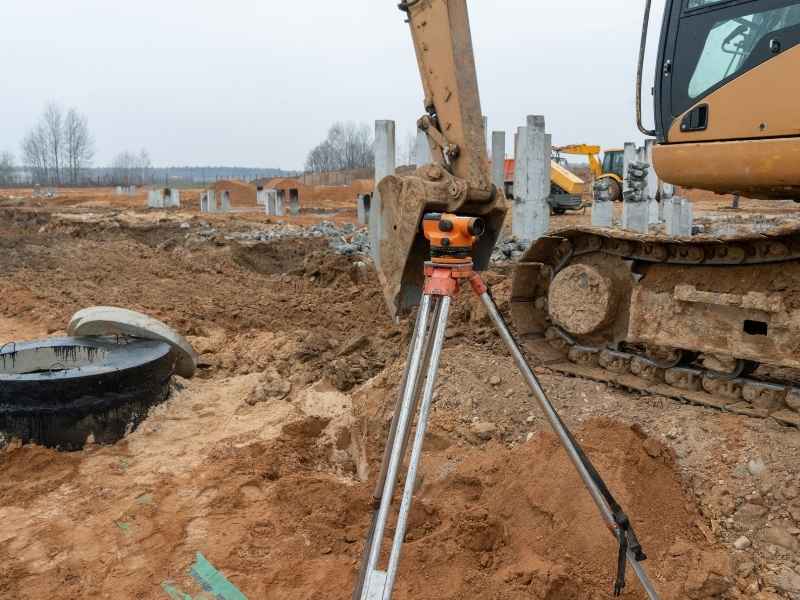
Construction staking marks the exact spot for a planned structure on the ground. A surveyor uses stakes, flags or paint to show contractors where to dig, pour or build.
This process takes the lines on a blueprint and turns them into real points crews can follow. Without it, workers are left guessing at locations from a paper plan. That guesswork leads to mistakes.
Projects often deal with tight lots, older infrastructure and mixed soil. These factors make precise staking even more important. A small measuring error on a crowded lot can push a structure into a setback area or too close to a neighbor’s land.
Staking usually happens in stages. Early stakes mark boundaries and rough building corners. Later stakes guide foundation work, utility trenches and finish grading as the project moves forward.
How Survey Layout Supports Accurate Building Placement
Survey layout is how surveyors turn design plans into real-world points on the ground. This step checks that what’s on paper actually fits the site.
A surveyor starts with the project plans. Then they use site control points and measuring tools to find exact building corners, elevations and reference lines. These points get marked in the field so crews know exactly where to build.
Accurate layout stops a common and costly problem: buildings that don’t match the approved site plan. If a building shifts even a little from its planned spot, it can throw off drainage, parking counts, utility hookups or setback rules.
What Survey Layout Typically Confirms
Most construction staking surveys set:
- Building corners and foundation lines
- Elevation points for grading and drainage
- Utility line locations
- Road or driveway alignment
- Site benchmarks used throughout construction
Ask your surveyor which reference points they’ll give you and how often they’ll need to come back to the site as work moves forward.
Preventing Construction Delays With Precise Field Marking
Field marking is where the design meets real life. When it’s done right, crews can move through each stage without stopping to double-check locations.
Wrong or outdated stakes cause real problems. A foundation poured in the wrong spot may need to be broken out and redone. A utility trench dug off line can hit an existing line or miss its connection point. These mistakes waste time, materials and labor.
Weather, equipment traffic and general site activity can knock stakes out of place during a project. Rain washes out marks. Machines knock over flags. This is why many contractors ask for re-staking at key points instead of trusting marks from weeks earlier.
Ask your surveyor how stakes will be protected and how often they’ll need to be checked or replaced during your project. A short conversation early on can save a full day of lost work later.
Coordinating Contractors Around Verified Site Locations
Construction staking only works if everyone on site trusts and uses the same reference points. This means clear communication between the surveyor, general contractor and any subcontractors working on utilities, grading or foundations.
Share staking information with every trade before work begins. A plumber laying underground lines needs the same accurate reference points as the crew pouring the slab. Mixed or old information leads to conflicting work and rework.
On projects with many stages, it helps to schedule a walkthrough with the surveyor and site superintendent before each major stage starts. This checks that current stakes match the active stage of work and lowers the chance of building off old marks.
Good teamwork also protects your schedule. Crews that know exactly where to work can move faster. They avoid the stop-and-check delays that come from unclear site markings.
Why Accurate Staking Matters Throughout Construction Phases
Staking isn’t a one-time task. Most projects need it at several points, from the first grading work through the final utility hookups.
Early-stage staking sets boundaries, building corners and rough grading points. As the project moves forward, staking supports foundation work, framing alignment and utility placement. Near the end, final staking may confirm driveway locations, parking layouts or landscaping boundaries.
Skipping staking at any stage raises the risk of costly errors. A misaligned foundation is expensive to fix. A utility line placed in the wrong spot can delay inspections or force rework that affects the whole project timeline.
Staking needs can vary by project type, site conditions and local permitting rules. Ask your surveyor which stages of your project need staking and build that into your overall schedule.
Frequently Asked Questions
What is a construction staking survey?
It’s a survey that marks the exact ground locations for a planned structure, road, utility line or other feature. Surveyors use stakes, flags or paint to guide contractors during construction.
How is construction staking different from a boundary survey?
A boundary survey shows where your property lines sit. Construction staking marks the exact locations of planned improvements within those boundaries, based on approved design plans.
When should I schedule construction staking?
Timing depends on your project stages. Many projects need staking before grading starts, again before foundation work, and maybe again before final utility or landscaping work. Talk with your surveyor early to build a schedule that matches your construction timeline.
